
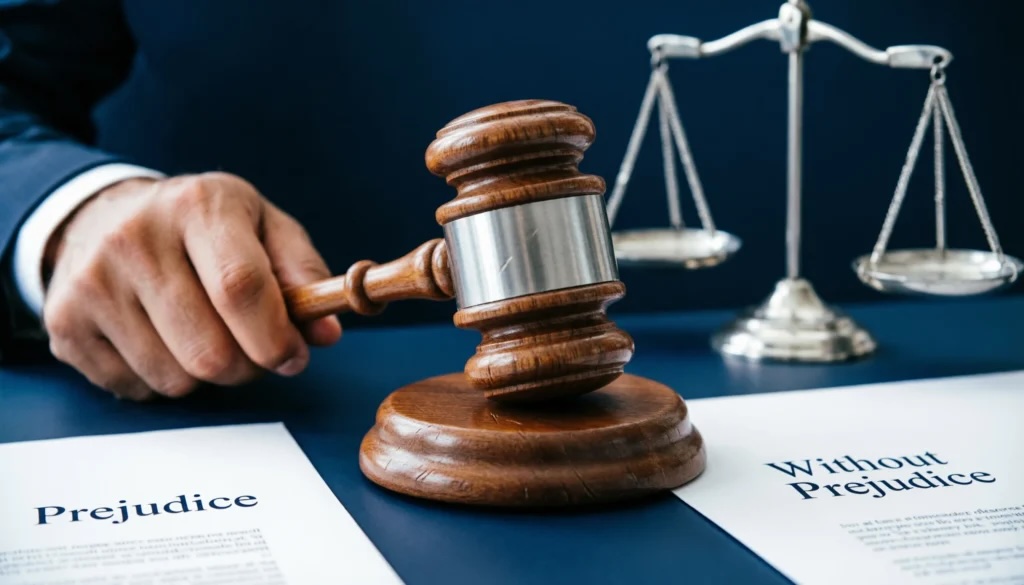
An appellate court does not reverse a judgment simply because an error occurred. In most cases, the appellant must show not only that the trial court erred, but that the error was prejudicial.
Prejudice focuses on whether the alleged mistake likely affected the outcome of the case.
Error Alone Is Not Enough
Courts distinguish between harmless error and reversible error. A harmless error may reflect a mistake in procedure or reasoning, but it does not justify overturning a judgment if the result would likely have been the same.
Appellate review is outcome focused, not perfection focused.
The Standard Depends on the Type of Case
The standard for determining prejudice can vary depending on the nature of the claim. Civil cases often require a showing that it is reasonably probable the result would have been different without the error.
Different legal contexts can apply different formulations of prejudice.
The Entire Record Is Reviewed
Appellate courts evaluate prejudice by reviewing the full record, not isolated portions. Evidence supporting the judgment is weighed against the alleged error.
If the record strongly supports the outcome, reversal becomes less likely.
The Burden Is on the Appellant
The party seeking reversal bears the burden of demonstrating prejudice. It is not enough to point to an error and assume harm.
The appellant must explain how the error affected substantial rights.
Speculation Does Not Establish Prejudice
Arguments based on possibility or conjecture generally do not satisfy the prejudice requirement. Courts look for concrete indications that the error influenced the result.
Without a clear connection between the mistake and the outcome, reversal is unlikely.
Prejudice Protects Finality and Stability
The prejudice requirement reinforces the principle that trials are not retried for minor or technical imperfections. It preserves finality while still allowing correction of meaningful errors.
Understanding prejudice clarifies why some trial errors, even acknowledged ones, do not lead to reversal.
