
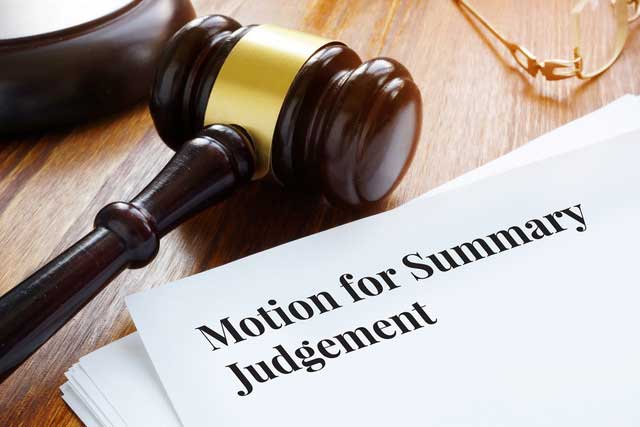
Many people assume that every lawsuit ends with a trial. In reality, some civil cases in California are resolved long before a jury or judge hears testimony. One of the most powerful ways a case can end early is through summary judgment.
Understanding what summary judgment is and how it works helps litigants set realistic expectations and appreciate why evidence and legal briefing matter so much in civil litigation.
What Summary Judgment Is
A summary judgment motion asks the court to decide a case without a trial. The moving party argues that there are no disputed material facts and that the law requires judgment in their favor based on the evidence already submitted.
Rather than weighing witness credibility or resolving factual disputes, the court evaluates whether any real factual disagreement exists that would require a trial. If the court finds none, the case may be resolved as a matter of law.
When Summary Judgment Is Filed
Summary judgment is typically filed after discovery has progressed. By that stage, both sides have exchanged documents, taken depositions, and developed evidence. This allows the court to evaluate the case based on an established factual record.
These motions are often filed when one party believes the evidence clearly supports their position and that no reasonable trier of fact could rule otherwise.
The High Legal Standard
Summary judgment is governed by a demanding legal standard. The court must view the evidence in the light most favorable to the opposing party. Any genuine dispute over a material fact usually prevents summary judgment from being granted.
Because of this high threshold, many summary judgment motions are denied. Filing such a motion requires careful evaluation of the evidence and a clear understanding of the applicable law.
Why Evidence Matters
Strong evidence is critical in summary judgment proceedings. Declarations, deposition testimony, documents, and admissions all play a central role. Unsupported arguments or conclusory statements are not sufficient.
The court relies on admissible evidence that is properly presented. Even strong facts may be disregarded if they are not supported by appropriate citations or fail to meet evidentiary requirements.
The Importance of Legal Briefing
In addition to evidence, persuasive legal briefing is essential. Summary judgment motions involve complex procedural rules and detailed legal analysis. The briefing must clearly explain how the law applies to the facts and why the case should be resolved without trial.
Opposing summary judgment requires equally careful briefing. Identifying disputed facts, pointing out evidentiary weaknesses, and articulating legal arguments can determine whether a case proceeds to trial or ends early.
What Summary Judgment Means for Litigants
When summary judgment is granted, it can end all or part of a case. In some situations, only certain claims are resolved, while others continue. In others, the ruling brings the entire lawsuit to a close.
Even when summary judgment is denied, the process often shapes the remainder of the case. It clarifies the issues, highlights strengths and weaknesses, and may influence settlement discussions.
Why Legal Guidance Is Critical
Summary judgment is one of the most technical stages of civil litigation. Small procedural errors or evidentiary missteps can have significant consequences.
Legal guidance helps ensure that motions are properly prepared, evidence is correctly presented, and arguments are clearly framed. Whether seeking or opposing summary judgment, experienced counsel plays a key role in protecting a party’s position.
